

? Is Your Google Cloud Bill Out of Control? ? Transcript so you started using cloud and your costs keep growing and growing every month it seems to be more and more money than you’re spending on cloud and you’ve realised it’s time to take a look and cut those costs down to something that’s more sensible if you’re using Google Cloud they’ve got the fin ops Hub and the billing manager where you can go and see where these costs are broken down they’re often broken down by project so you can kind of see where some of the hot spots are and to reduce that the next thing you should start looking at is Devon test workloads and people pay me to come in and consult and say hey do you really need your development workloads running 24/7 when your developers are only working 9 to 5 it’s pretty logical get that turned off when it’s not in use even better get those running on spot instances these are substantially cheaper but when Google have low capacity they will take them away from you that will kill the developer workflow but it will ensure that your developers are writing code that can tolerate failures which is key to running anything on cloud the next thing you want to do is you want to enhance the visibility you’re getting into where you’re spending money now this is done with labels so every project or every resource that you have running should have a label on it with an owner and that owner should get an invoice not an invoice but a report at the end of each month showing how much money they’ve spent that will Empower your team to understand that they might be spending money that they don’t know about and have a look and see if they can reduce that by themselves this is really simple with Google creating labels putting them on everything and then exporting all the billing data into B crew so you can slice it dice it run reports and figure out where you need to focus your cost saving another few things that often get missed is Right sizing computer machines so being a computer engine you can individually change your memory and CPU to right size it to your workload now a lot of people do this as a one-time exercise and they kind of guess it they never come back and revisit it there’s tons of reports in Google where you can go through have a look at these things and then save yourself considerable money just by getting rid of unnecessary resources that your machines aren’t using if you donate anyone have a look at this feel free to reach out thank you
Cloud
This is a selection of posts about partnership with Google Cloud, and how we can help you implement Google Cloud services to solve your business problems.
This is a parent catagory with subordinate catagories to cover off Cyber Security, Infrastructure, and our AI and ML practice.

How do you know if AI is actually answering your question, and not just spitting out nonsense?
How do you know if AI is actually answering your question, and not just spitting out nonsense? Transcript so I’m going to break down a few Concepts you might have been hearing when people are talking about AI the first one is retrieval augmented generation or rag it’s a bit of amouthful but it’s really simple if you ask an LL question so chat GPT or Google’s Gemini it’s going to respond based on what it’s being trained on which is the context of the entire internet but nothing specific to your business rag solves this problem by taking your business data uploading it into a database so that when you ask a question the question can retrieve data from the database based on your business and then formulate a response that’s grounded in that this reduces hallucinations or llms making up nonsense and make sure that it’s using data that is real from your business now the other concept we have is chunking if we’re taking documents and uploading them into the database we don’t want to upload entire documents cuz we’re not going to send entire documents to the llm very expensive so we chunk this you could chunk via paragraph but sometimes you need the paragraph surrounding that paragraph to get the full context or you can chunk via headings now different things are going to work for different businesses depending on how your data is structured by fining the way we chunk and store that in a database so that the LM can retrieve it and swapping out the llm model we can optimize for your business making sure that you get the best results possible for the best price possible whenever a new llm is released we can also test that very rapidly and see if that’s going to give you better results or a better price if you’re interested in learning more about this feel free to reach out happy to have a chat with anyone on these subjects thanks
Video Post: ? Stop Wasting Money! ? Easy Cost Cutting for Your Business!
Getting Started With Google Cloud Transcript getting started with Google Cloud can seem overwhelming at first as with any cloud there are a lot of services that you can use and each has configuration options that can get you into trouble when I worked at Google Cloud I helped some of the biggest brands in Australia set up their cloud environments and I’ll give you a few tips that I learnt from doing that the first thing you wanna do is enable some structure trading an organisation and then creating folders in the organisation to keep projects organised and allow to give groups of users permissions to do things to those projects for example putting all the development projects in a folder called development and giving developers access to those and then having all of the production projects in a production folder maybe without access for developers or for other groups of people once you have the folder set up you need to set up identity and access management so as I kind of touched on that’s creating a group putting developers in the group and then giving that group access to the folder that contains the projects that developers need to work on to do their jobs we may not wanna give them access to the production folder at all or maybe we only give them read only access this is a super simple example and we can nest folders and get much more complex with it and any environment that we’re talking about is gonna have more complexity than that this is a simple explanation now we wanna start talking about organisational policies we’ve got a group of developers that got access to their projects and development folder that we still don’t wanna do anything silly like putting a cloud storage bucket on the internet so that anyone can see what our files are even if those are development mocked data having a data breach is not gonna be good in the headlines there’s a ton of all policies and each one of them needs to be configured and this one example appear for the cloud storage bucket we may need an exception for the public facing internet to be on the internet once we have all this set up we kinda wanna make sure that we’re managing with code if a developer does request that a cloud storage bucket be put on the internet we wanna see who requested that and why and track those changes the logical step here is using infrastructure as code we use Terraform the same as the best practice at Google Cloud that Google had professional services used when I was there and we can do the same for your business in 5 days excluding any complex networking some people are spending much longer on this and it’s really not that complex if this sounds too complex do reach out we’ve done this when working at Google so we know the best practices and we know how to set you up securely so that your business can scale on Google Cloud thank you
Video Post: AI with BigQuery And SQL
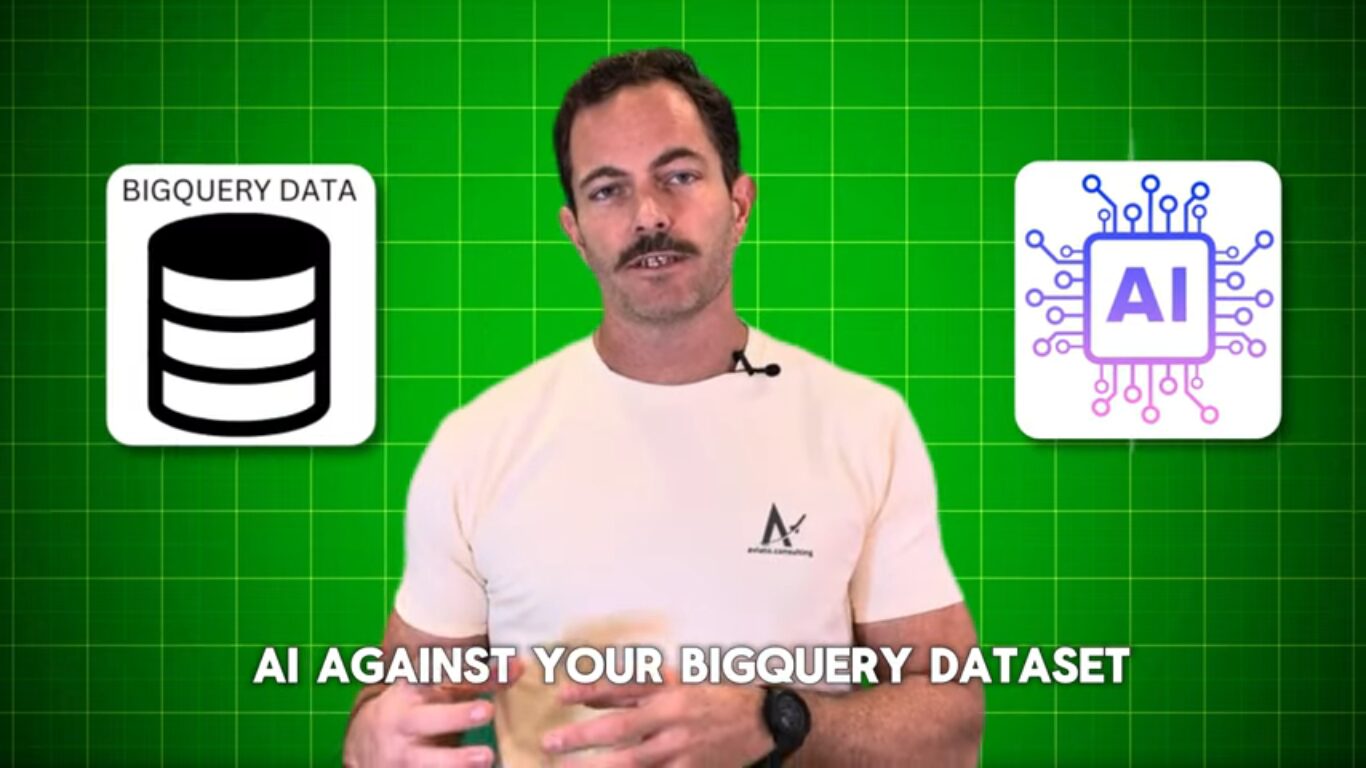
Stop waiting to unlock the power of AI! ? You already know SQL… and that’s ALL you need. Transcript if you have a lot of data stored on Google Cloud for analytics it’s probably going to be stored in B query now everyone’s trying to do Ai and their training models using pre-existing models spending a lot of money on data scientists but I’ve got some great news if you’re using be query be query has be query ml built into it this lets you run AI against your B query data set by using SQL now SQL is the language used by all the people doing queries or database administrators now it’s very simple to use and you probably already have the skills so you don’t need to go and hire expensive data scientists and AI Engineers to gather insights from your data I’m going to break down some of the models that are built into B cre ml to see if these are going to solve business problems for you first one is linear regression this is predicting how much you’ll sell based on past data so if you’re planning stock Staffing trying to run promotions more accurately this is for you it’s built- in can be run with sequel the next one is logistic regression this is sorting things into categories so let’s say you want to sort customers into categories um to see whether they’re going to buy from you again um or if products are faulty putting them into categories saying these products are likely going to be faulty so you can see the use cases for business the next one is K means clustering this finds hidden groups within your customer base so you can Target marketing campaigns towards them the next Matrix factorisation suggesting which customers might be likely to buy an it this is kind of what you’ll see when you get predictive things on websites saying and you might also like to buy X I think we’re up to the fifth one PCA or principal component analysis this is simplifying complex data to find the most important pattern helping you spot Trends and make more informed decisions the last one I’ve got is time series so predicting future sales based on past data helping you predict demand and make sure you have enough stock based on things that have happened in the past so all of these models are already build into big query ml as I said and can be accessed using SQL queries which you likely already have the skills for in your organisation to enabling your organisation to make AI enabled decisions without spending an absolute Fortune if you want help with any of this Reach Out aviato Consulting can help you thanks
Video Post: Google Cloud Vertex AI & Hugging Face
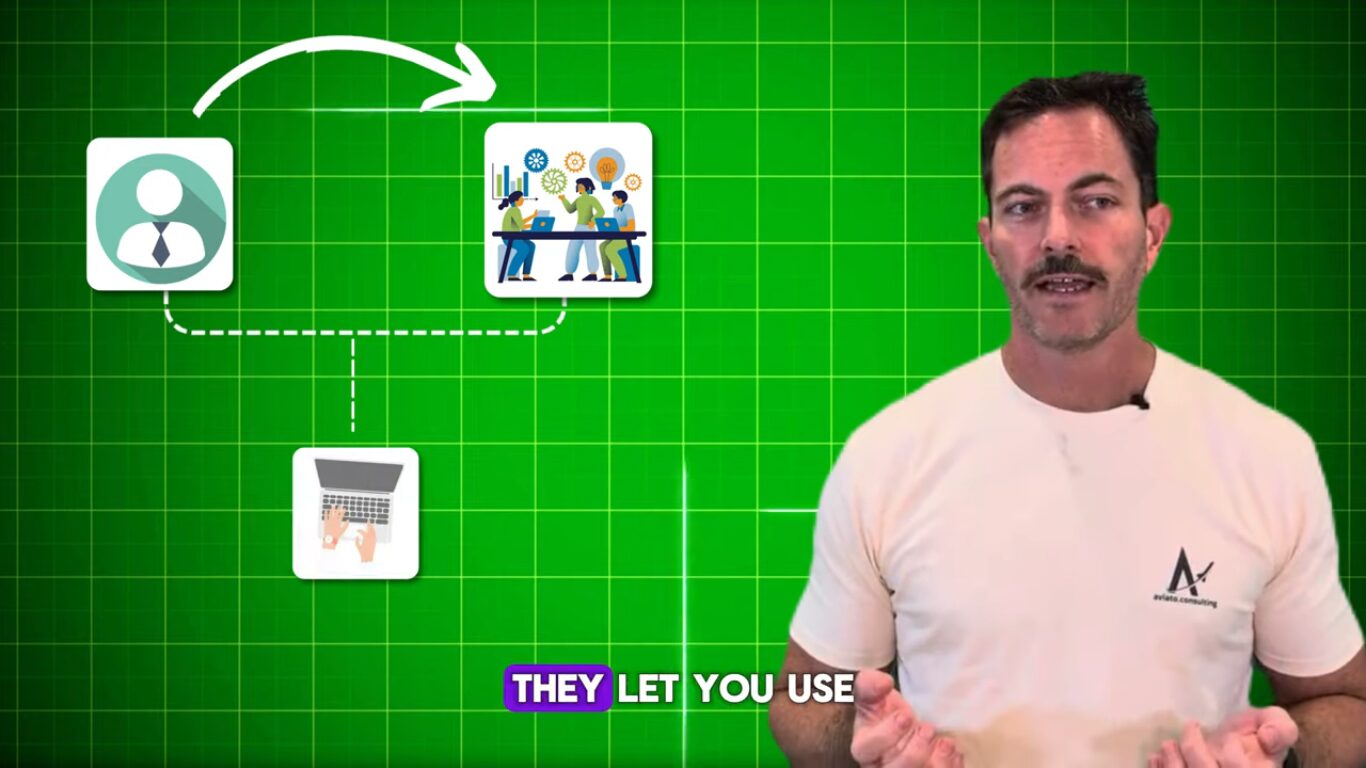
Who Really Owns Your App? Transcript did you know that most app developers in Australia don’t let you own the IP that they develop for you let me break that down for you you pay someone to write an app for you they let you use it licensed to use it commercialize it change it but you don’t actually own the intellectual property now what would happen if someone else had a similar idea to you went to the same app developer they could sell the code that you paid them to develop this other person doubling their money the next day all they need to do is change the colors and logo maybe make a few slight changes and you’re going to have a competitor now the app developers made a ton of cash on this cuz they’ve sold the same thing twice and only done the work once but you’ve got a competitor that’s going to compete with you and I don’t think that’s really fair and that’s not what we do at aviato at aviato if you pay us to develop your app you own the intellectual property we aren’t going to steal it and use it elsewhere and we’re not going to sell it to a competitor a few days after we finish your project so that then you have someone to compete with in the marketplace if you are looking to get an app developed this is really something that you should be checking with the app developer that you’re going to use reach out to us if ou do want to get an app developed Thanks
Navigating the AI Maze
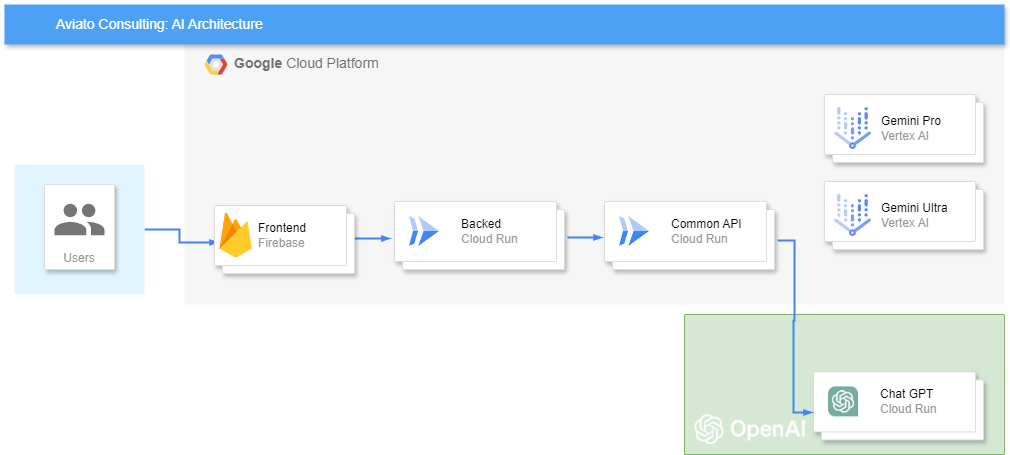
The AI landscape is exploding with a dizzying array of models, from the Large Language Models (LLMs) most of us have experimented with like Llama 2 or 3 from Meta, Claude 2 from Anthropic, and Bard (now Gemini) from Google, and the original ChatGPT. Each boasts unique capabilities, from generating different creative text formats to translating languages and answering your questions in an informative way. To make this even more confusing we have models that excel at robotics, tabular regression, image generation, or depth estimation. Choosing The Right Model For Your Business While this abundance offers exciting possibilities, it also presents a significant challenge: choosing the right model for your specific needs, and doing it within your budget. The pricing models for these vary greatly Gemin 1.0 advanced, to 1.5 Ultra is a 10x cost differential. For businesses, this creates an impossible puzzle: how do you select the optimal model without getting lost in the ever evolving AI arms race? And how do you do this within your budget? The answer lies in flexibility. Instead of locking into a single model, businesses need an adaptable infrastructure that allows them to test their business use case against one model, evaluate the performance and then try another, without rebuilding the solution. Additionally as new models are released, testing these to see if there is an uplift to the value of the model quickly, is going to give you the competitive advantage over others that need to rebuild their solution. This ability to quickly swap out models offers several key benefits: Architecture Architecting a solution that works for your business can be easily acheived on Google Cloud with Vertex AI, but this will exclude you from using ChatGPT or other models not avaiable on Huggingface.co LLMs on Google Cloud Vertex AI Google Cloud’s Vertex AI provides the perfect platform for achieving this flexibility. It allows businesses to seamlessly deploy, manage, and experiment with various LLMs through a unified interface. If you are not happy with the 50 or so models they have, you can deploy one from Huggingface.co which has over 600,000 models to choose from. The alternative solution for the non Google customers could be to write a common API, which would give you the flexibility to swap out models, or use Chat GPT which is one model that you cannot find on either Google or Huggingface.co Any LLM With a Common API Either option empowers you to leverage the strengths of different models, test each of them against your unique problems, and stay ahead of the curve in the rapidly evolving AI landscape. Aviato Consulting, a Google Cloud Partner, specializes in helping businesses navigate the complexities of AI and implement flexible LLM solutions on Vertex AI. Our expertise ensures you harness the full potential of AI, maximizing its value for your specific business needs.

Deep Dive into GCP Security Advanced Controls
A deeper understanding of GCP’s advanced security features and best practices

Video Post: Nobody gives a shit about cyber security
Nobody Gives A Shit About Cyber Security Transcript nobody gives a shit about cyber security honestly nobody care I think partly it’s cause the messaging is terrible but cyber security experts tell us what to do but they don’t really explain why and what they tell us to do is hard to do it’s cumbersome and time consuming hopefully I can fix that the No. 1 thing everyone tells us to do is to enable multi factor authentication now every time you sign in having to get an SMS code or use your authenticator app to get a code slows you down it’s just annoying introducing the hardware security key so not many people speak about or use these devices I plug this into my laptop and every time I log in I simply touch it it takes a second this means that anyone trying to hack me would need my password and would need to get this now that’s not impossible hackers could come to my house and take it but we have the police for that and that’s much more difficult and time consuming than sending out a fishing email this one thing will protect you against most cyber attacks if you click the link in a fishing email they might get your password but they’re not gonna get this very very simple security effortless to employ and it doesn’t take any extra time the next one is using a password manager so everyone wants to have 1 password for everything so if you use that password for everything that’s great super simple but let’s say you use your password to book a haircut at your hairdresser and my barber’s okay with cutting hair he’s probably terrible with cybersecurity if he gets hacked the hackers are gonna have my email address and my password that’s used everywhere they’re gonna go from there directly into my email and then probably try to get into my bank using a password manager means that I have one password that unlocks my password manager and then it types all of my passwords for me so all of my passwords apart from the one that I need to remember a super complex 20 something characters streams of numbers letters and characters on my phone and my computer I have my password manager installed half the time I log into that and it types all my passwords for me so actually saves me time these two things are pretty much the main point that will stop you from getting hacked if you do want any other help especially if you want a cloud security order for your business on your cloud reach out to Aviato Consulting will happily help you with that one but try these as well this one’s called a UBQ you can Google it it costs about $100 and will save you a ton of headache thanks

Video Post: Getting Started With Google Cloud
Getting Started With Google Cloud Transcript getting started with Google Cloud can seem overwhelming at first as with any cloud there are a lot of services that you can use and each has configuration options that can get you into trouble when I worked at Google Cloud I helped some of the biggest brands in Australia set up their cloud environments and I’ll give you a few tips that I learnt from doing that the first thing you wanna do is enable some structure trading an organisation and then creating folders in the organisation to keep projects organised and allow to give groups of users permissions to do things to those projects for example putting all the development projects in a folder called development and giving developers access to those and then having all of the production projects in a production folder maybe without access for developers or for other groups of people once you have the folder set up you need to set up identity and access management so as I kind of touched on that’s creating a group putting developers in the group and then giving that group access to the folder that contains the projects that developers need to work on to do their jobs we may not wanna give them access to the production folder at all or maybe we only give them read only access this is a super simple example and we can nest folders and get much more complex with it and any environment that we’re talking about is gonna have more complexity than that this is a simple explanation now we wanna start talking about organisational policies we’ve got a group of developers that got access to their projects and development folder that we still don’t wanna do anything silly like putting a cloud storage bucket on the internet so that anyone can see what our files are even if those are development mocked data having a data breach is not gonna be good in the headlines there’s a ton of all policies and each one of them needs to be configured and this one example appear for the cloud storage bucket we may need an exception for the public facing internet to be on the internet once we have all this set up we kinda wanna make sure that we’re managing with code if a developer does request that a cloud storage bucket be put on the internet we wanna see who requested that and why and track those changes the logical step here is using infrastructure as code we use Terraform the same as the best practice at Google Cloud that Google had professional services used when I was there and we can do the same for your business in 5 days excluding any complex networking some people are spending much longer on this and it’s really not that complex if this sounds too complex do reach out we’ve done this when working at Google so we know the best practices and we know how to set you up securely so that your business can scale on Google Cloud thank you

Aviato,Your Google Cloud Partner for AI
The AI revolution is here, and businesses that embrace its potential stand to gain a significant competitive edge. However, navigating the complex world of AI can be daunting. That’s where Aviato Consulting, a trusted Google Cloud Partner, steps in to guide your business through a successful AI journey on Google Cloud. Unlocking AI Potential with Aviato and Google Cloud: Why Choose Aviato Consulting: Examples of AI Use Cases Aviato Can Help Implement: Embrace the AI Future with Aviato and Google Cloud: Partner with Aviato Consulting to unlock the transformative power of AI for your business. Leveraging Google Cloud’s advanced AI technologies and Aviato’s expertise, you can gain a competitive edge, optimize your operations, and drive innovation. Let us be your trusted guide on your AI journey.
